
5 Reasons Why Happy Hour Isn’t the Best Marketing Tool for Your Restaurant
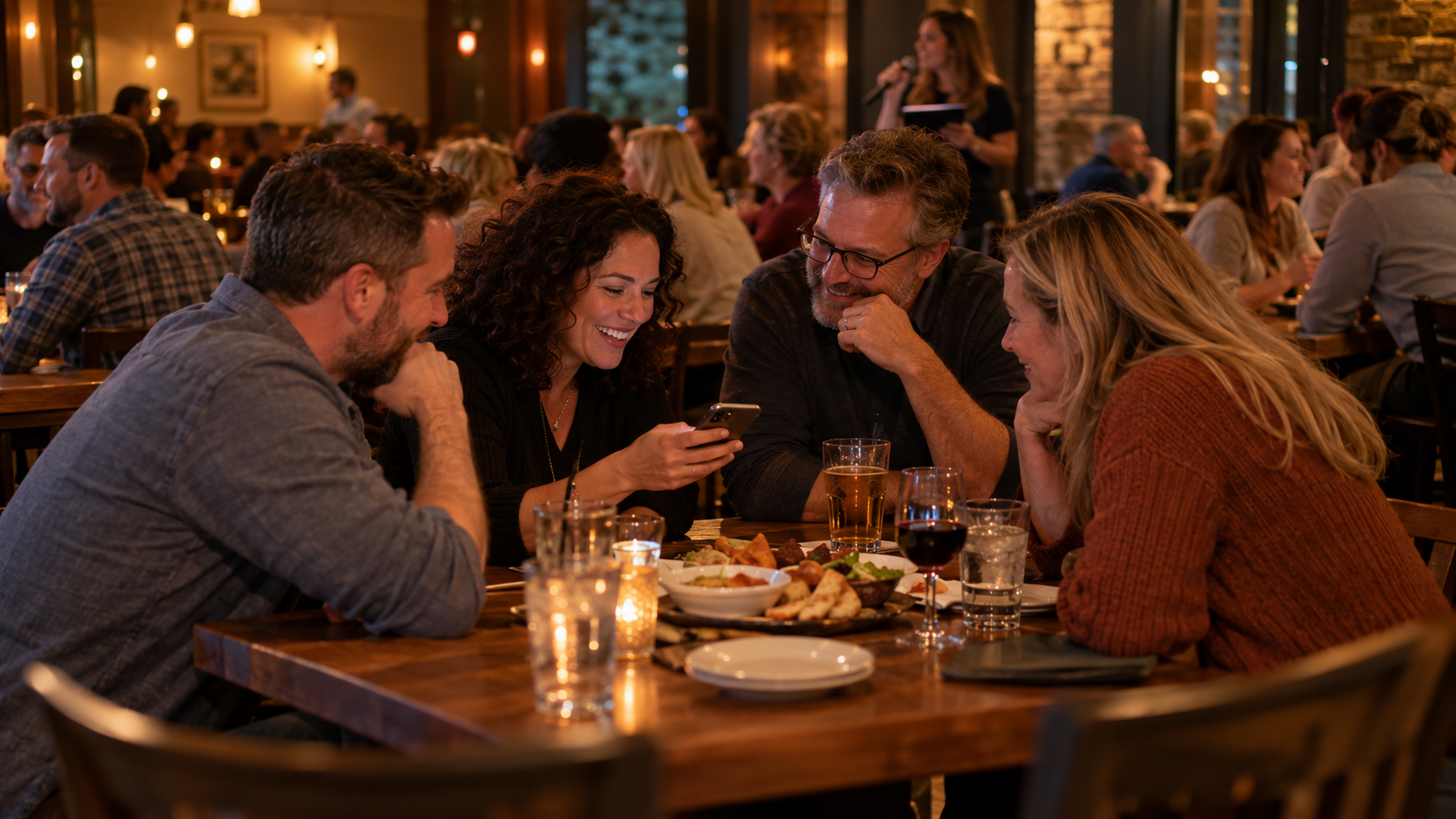
You’ve got a good restaurant. Good food. A staff that cares. Plenty of people who enjoy coming in.
So why are you still staring at empty tables on a Wednesday?
You’ve tried the drink specials. Discounted the appetizers. Posted the happy hour menu again. Maybe it brings in a few more people. Maybe your regulars take advantage of it.
But has it actually fixed your slow night?
If you’re still running another special to solve the same problem, it’s time to look at what you’re asking your marketing to accomplish.
Your restaurant needs a reason for people to make plans, invite friends, and come back next week.
A recurring event gives you something to build that behavior around. Here’s why it deserves your attention before you discount another dollar.
1. You’re giving up money you worked hard to earn
You priced your menu to cover ingredients, labor, rent, insurance, utilities, and everything else it takes to keep the doors open.
Then a slow night comes along, and you start cutting those prices.
Your expenses keep showing up at full price.
The National Restaurant Association found that full-service restaurants surveyed reported median income before taxes of just 2.8% of sales in 2024. That is a very thin cushion for a strategy built around collecting less money per sale. [1]
Here’s a simple example. You sell an item for $20. Its variable costs are $8, leaving $12 toward your fixed expenses and profit.
Discount it to $15, and that contribution drops to $7.
You now need to sell about 71% more units to generate the same contribution.
The discount math
A 25% price cut changes what you keep
More units needed at the discounted price to generate the same contribution.
That’s hypothetical math, with unchanged variable costs and no extra staffing included. But it raises a very practical question:
Is your happy hour delivering enough additional business to justify what you’re giving up?
You owe it to your restaurant to know.
2. You’re making price the easiest way to compare you
If your main message is “our drinks are cheaper,” you’re inviting customers to compare your prices.
And somebody else can always run another special.
You’ve put too much work into your food, your staff, and your atmosphere to make a discounted beer the strongest reason to choose your restaurant.
The National Restaurant Association’s 2025 findings show that 64% of full-service customers say their dining experience matters more than the price of the meal. [2]
People want their money to buy a night worth having.
Give them an engaging host, friendly competition, good food, and a room they enjoy spending time in, and you have more to promote.
You can tell them what’s happening. Show them who’s coming. Give them a reason to get their group together.
Your restaurant has a personality. Your marketing should give people a chance to experience it.
3. A happy hour menu still leaves the customer to make the plan
Think about what happens when someone sees your happy hour post.
They still need to decide whether to go out, whom to invite, and whether your restaurant is where everyone wants to meet.
A weekly event helps answer those questions.
“Trivia Wednesday at 7” gives them a day, a time, and something to do together.
Now someone has a reason to send the group text:
“Who’s in this week?”
That’s the behavior you want to encourage. People making plans around your restaurant.
An event still needs promotion. You need a consistent schedule, clear information, and a night that delivers when people arrive. Posting once and hoping for a crowd isn’t a marketing plan.
But a recurring event gives your promotion a specific job: get the right people interested in joining the next night.
Stop making every slow Wednesday a fresh emergency. Give it a plan you can build on.
4. You need people who come back because they enjoyed being there
A discounted check tells you someone used the offer. It doesn’t tell you they’ve found their new favorite restaurant.
A great experience gives you more to work with.
In SevenRooms’ 2025 U.S. restaurant research, 74% of consumers said they had returned—or planned to return—to a restaurant after a unique experience. That combines reported visits and intentions; it isn’t a guaranteed return rate for trivia. It does show how strongly an experience can figure into the decision to come back. [3]
What diners say
Experience gives guests another reason to choose you
Of full-service customers say their dining experience matters more than the meal’s price.
Of consumers said they had returned—or planned to return—after a unique restaurant experience.
A recurring trivia night creates opportunities to build that connection.
Your staff recognizes the team that comes every week. The host remembers their name. Guests get familiar with the room and the people around them.
There’s a little rivalry. A running joke. A reason to try again after last week’s terrible answer.
You can help turn “we should go out sometime” into “we’ll see you Wednesday.”
That takes consistency and good hospitality. But those are investments in the restaurant you’re trying to grow.
5. You’re entitled to more than “it looked pretty busy”
When you spend money on your restaurant, you should be able to evaluate what you got back.
Happy hour deserves that scrutiny. So does trivia.
How many additional guests came in? What did they spend? What did the promotion cost? Are people returning? Is the night improving over time?
A full room is encouraging. Profitable additional business is the goal.
Compare similar weekdays, account for seasonal changes, and include discounts, event costs, and additional labor in your calculations.
Use actual sales where available. If you multiply attendance by an average check, treat the result as an estimate.
If your current marketing leaves you guessing every week, you need better information to decide what to keep, what to change, and where to invest next.
Enough discounting without a plan. Let’s build your night.
You don’t need to wait for another disappointing weeknight to make a change.
You can give your restaurant a recurring event people can put on their calendars—and support it with promotion, a reliable game, and a welcoming experience.
That’s what we help you build at Quizzoholics.
We provide professional trivia content, a digital game system, event promotion, training, and reporting that helps you understand attendance and returning participation. Your staff can host with our support, or we can discuss hosted options where available.
You bring the food, the hospitality, and the personality that make your restaurant yours. We help you give people another reason to walk through the door.
Happy hour can remain part of your business. But if you’re depending on it to rescue the same slow night every week, it’s time to give that night a stronger marketing plan.
Schedule a call with Quizzoholics
Let’s pick the night, talk through your venue, and build something your customers will want to come back for.
Industry sources
[1] National Restaurant Association — 2025 Restaurant Operations Data Abstract. The 2.8% median describes surveyed full-service restaurants’ 2024 pre-tax income as a share of sales; it is not a benchmark for every venue.
[2] National Restaurant Association — 2025 State of the Restaurant Industry findings. The 64% figure reflects full-service customers’ stated priorities.
[3] SevenRooms — 2025 U.S. Restaurant Trends Report. Censuswide surveyed 1,000 U.S. consumers online. The 74% figure combines reported returns and plans to return after a unique experience.